

Green maeng da kratom capsules are having a moment again but in 2026, the conversation is less hype and more about consistency, lab testing, and predictable routines. Why now? Consumer demand for functional, “on-the-go” wellness formats continues to climb: capsules remain one of the fastest-growing supplement delivery forms because they’re portable, measurable, and easy to standardize (Council for Responsible Nutrition, 2023). At the same time, kratom quality has become a make-or-break issue as more states adopt stricter rules on adulterants and labeling.
In this guide, you’ll learn what makes Green Maeng Da so popular for energy and focus support, how capsule formats compare (plain leaf vs. extract), what the research says, and how to buy kratom capsules with fewer risks especially when shopping for kratom capsules online.
What makes Green Maeng Da kratom capsules different?
balanced often described as smoother than white (more stimulating) and more daytime-friendly than red (more calming). The key point for 2026: strain names aren’t a regulated standard, so what matters is vendor quality controls, batch testing, and transparency.
Why capsules are the default choice for busy adults (21+)?
Capsules win on practicality. They simplify routines, avoid the bitter taste, and help people keep intake consistent. For many customers, this isn’t about “more” it’s about repeatable results with fewer variables. The capsule format also supports more disciplined use: you can track how many capsules you took, when, and how it affected your day.
The active compounds reality: what actually drives effects
Kratom contains many active compounds; two of the most discussed are mitragynineand 7-hydroxymitragynine. Mitragynine is typically the most abundant, while 7-hydroxymitragynine is usually present at much lower levels but is often described as more potent at certain receptors. Importantly,active compounds content can vary widely by region, harvest, drying method, and storage conditions one reason batch-specific COAs (Certificates of Analysis) matter.
In the U.S., kratom remains a topic of active public-health discussion. The FDA has repeatedly raised safety concerns and has not approved kratom as a dietary supplement or drug. Meanwhile, consumer use is widespread: a nationally representative U.S. survey estimated 0.7% of adults reported past-year kratom use (NSDUH, 2019). That demand has fueled both high-quality operators and low-quality opportunists so buyer education is non-negotiable.
Why Green Maeng Da is associated with energy and focus support?
Most people who choose Green Maeng Da aren’t chasing a “wired” feeling. They’re looking for a cleaner kind of momentum: better task initiation, steadier mood, and a more “locked-in” work window without the edgy crash that some get from high-caffeine strategies.
Balanced profile: “daytime drive” without feeling over-stimulated
While experiences vary, Green Maeng Da is often selected for “functional” hours: mornings, mid-day slumps, or pre-work. Many users report it feels more even than white strains and less sedating than reds. That “middle lane” is exactly why it’s popular among people who need to perform meetings, studying, long shifts, parenting, or workouts.
What research can (and can’t) say in 2026
Human clinical research on kratom is still limited compared to mainstream supplements. However, observational research helps clarify how people use it. A large survey of kratom consumers found many reported using kratom for energy, mood, and productivity alongside other self-care goals (Garcia-Romeu et al., 2020, Drug and Alcohol Dependence). Another key point: U.S. poison center data has historically shown rising kratom-related calls during periods of rapid market growth, reinforcing the need for responsible use and quality controls (Anwar et al., 2016; Post et al., 2019).
Practical takeaway : Treat kratom as a potent botanical start low, avoid stacking with risky substances, and prioritize third-party lab testing.
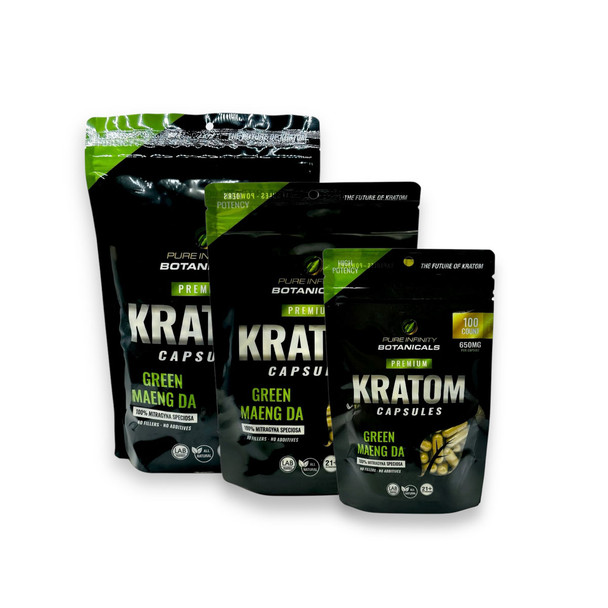
Capsules vs. powder vs. extract capsules: what to choose (and why)
Not all maeng da kratom capsules are created equal. In 2026, the market is clearly split into (1) plain leaf capsules, (2) enhanced blends, and (3) kratom extract capsules. Your choice should match your goals, sensitivity, and desire for predictability.
|
Format |
Best for |
Pros |
Watch-outs |
|---|---|---|---|
|
Plain leaf capsules(e.g., 500 mg/cap) |
Daily routine, gradual onset, consistent habits |
Simple, easier to “start low,” often better value |
More capsules needed; quality varies by brand/batch |
|
Powder |
People who want flexible dosing |
Adjust dose precisely; typically lowest cost per gram |
Taste; messy; easier to accidentally overdo |
|
Kratom extract capsules |
Experienced users seeking stronger effects |
Smaller serving size; more “noticeable” for some |
Higher tolerance risk; harder to compare dosing; must verify active compound standardization |
How to read a label like a pro (especially for extracts)?
For plain leaf, look for grams per bottle, capsule size, and a batch number tied to a COA. For extracts, demand clarity: “10:1” alone is not enough. You want standardized active compound content( e.g., % mitragynine) and contaminant testing. If a brand can’t explain what “extract” means in measurable terms, that’s your cue to walk.
How to use Green Maeng Da kratom capsules responsibly?
People get the best experience from kratom when they treat it like a routine, not a rollercoaster. The most common “bad kratom” story is actually a bad strategy: too much, too often, poor-quality product, or mixing with substances that increase risk.
Start low, go slow: a capsule-based approach
Many capsule products contain ~500 mg per capsule, but always confirm your label. A conservative approach is to start with a low number of capsules, assess after 60–90 minutes, and avoid re-dosing impulsively. Keep notes for at least 3 sessions to learn your personal response curve.
Timing for energy and focus support
For many adults, the sweet spot is morning or early afternoon when you need execution, not sedation. Late-day use can backfire if it disrupts sleep, which then undermines energy and focus the next day. Treat it like caffeine in that sense: timing matters as much as dose.
Safety and interaction red flags (don’t ignore these)
Public health agencies have highlighted risks of combining kratom with other substances—especially sedatives and alcohol. In an analysis of kratom-related deaths, many cases involved polysubstance exposure, making it difficult to isolate kratom’s role (Olsen et al., 2019, MMWR). The practical implication is simple: don’t stack kratom with substances that can amplify respiratory depression or impairment.
What’s changing in 2026: quality standards, regulations, and consumer expectations?
The 2026 kratom market is more mature than it was in the late 2010s and early 2020s. Consumers are less tolerant of mystery sourcing and more insistent on proof. This shift is partly driven by wider adoption of state-level consumer protection frameworks such as Kratom Consumer Protection Acts (KCPAs), which generally target adulteration, labeling accuracy, and contaminant limits (American Kratom Association, ongoing legislative tracking through 2026).
Trend 1: lab testing is no longer a “premium feature” it’s table stakes
Serious brands now publish COAs that include microbiological screening (e.g., Salmonella), heavy metals (lead, arsenic, cadmium, mercury), and active compound potency. This emphasis aligns with broader supplement trends: consumers increasingly look for third-party verification and transparency, especially after years of contamination headlines across multiple supplement categories (CRN Consumer Survey, 2023).
Trend 2: capsule innovation (clean excipients, better stability, improved digestion)
More brands are moving toward cleaner capsule materials, fewer fillers, and better humidity control in packaging. You’ll also see improved “lot traceability” systems—QR codes tied to COAs and supply-chain records. If a seller can’t show batch-specific documentation in 2026, they’re behind the market.
Trend 3: functional positioning less “strain mythology,” more measurable outcomes
The industry is moving away from vague promises and toward lifestyle outcomes consumers can track: productivity blocks, workout compliance, mood stability, and reduced reliance on high-sugar energy products. The brands that win are the ones who help customers build a system dose timing, tolerance breaks, hydration, and realistic expectations.
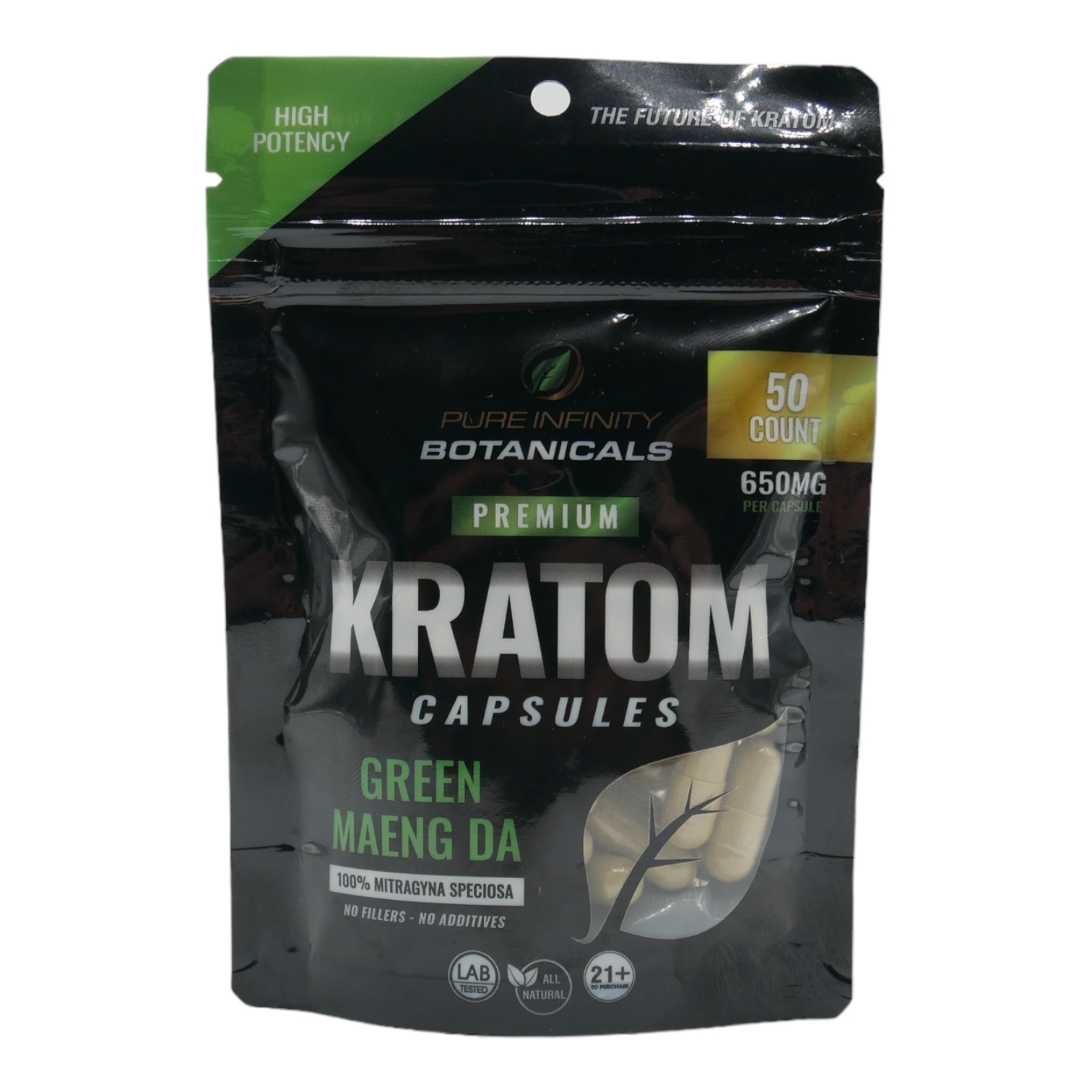
How to buy kratom capsules online without getting burned ?
If you’re going to buy kratom capsules especially kratom capsules online you need a screening process. The market still contains under-tested products, inconsistent batches, and marketing that overpromises. Here’s how experts separate legitimate operators from label-deep brands.
What “botanical capsule” should mean in 2026?
A botanical capsule should be more than ground leaf in a shell. The standard should include identity testing (confirming the plant material), contaminant screening, and stability-aware packaging. If you see “lab-tested” with no lab name, no batch number, and no dates, assume it’s marketing not science.
Price reality check: spotting suspicious deals
Pricing varies by quality, testing frequency, and supply chain. If a deal looks too good, it often signals corners being cut especially in testing. You don’t need the most expensive product, but you should be skeptical of “bulk capsule” pricing that undercuts the market while claiming premium standards.
Common mistakes to avoid (and pro tips for better results)
Most disappointment comes from predictable errors. Fix these, and Green Maeng Da becomes far more consistent and far less likely to cause the “I felt great once, then terrible” cycle.
Mistake 1: chasing intensity instead of consistency
Taking more doesn’t always mean better focus—sometimes it means fog, nausea, or irritability. Pro tip: aim for the smallest amount that reliably supports your day, and track results in a notes app for two weeks.
Mistake 2: using extract capsules as your “starter” product
Kratom extract capsules can be useful, but they’re easier to overdo and can accelerate tolerance. Pro tip:start with plain leaf capsules, dial in timing and hydration, then reassess.
Mistake 3: ignoring hydration, food, and sleep
Many “side effects” are made worse by dehydration or poor sleep. Pro tip: pair your routine with water, electrolytes if needed, and a hard stop time that protects sleep.
Mistake 4: mixing kratom with alcohol or sedatives
This is where risk climbs. Remember: many serious adverse-event reports involve multiple substances (Olsen et al., 2019). Pro tip: keep kratom as a stand-alone variable so you can actually learn what it does for you.
Mistake 5: buying from vendors with no proof
The most disruptive truth in this industry: some sellers are essentially drop-shippers with labels. Pro tip: if a vendor can’t produce batch COAs and answer questions clearly, they don’t deserve your money.
Conclusion
Green Maeng Da remains popular in 2026 for a simple reason: it fits real life. When it’s lab-tested, ethically sourced, and used with a disciplined routine, it can be a practical option for adults looking for energy and focus support without the chaos of guesswork products.
If you’re ready to upgrade your routine, choose a brand that treats kratom like the potent botanical it is tested, traceable, and honestly labeled. That’s how we do it at Pure Infinity Botanicals.
Contact us If you have questions about lab reports, capsule sizing, or choosing between plain leaf and kratom extract capsules, reach out through our Contact Us page or customer support portal at Pure Infinity Botanicals for batch-specific documentation and guidance.
Frequently asked questions
What are green maeng da kratom capsules best for?
Many adults use green maeng da kratom capsules for daytime energy and focus support with a “balanced” feel compared with more stimulating whites or more relaxing reds. Individual response varies by dose, product quality, and personal sensitivity. For best results, focus on consistency and conservative dosing.
How long do maeng da kratom capsules take to kick in?
Capsules often take longer than powder because the capsule must dissolve first. Many users report onset around 30–90 minutes, depending on food, hydration, and metabolism. Avoid rapid re-dosing before you’ve given a full window to assess.
How many capsules should I take for energy and focus?
Capsule strength varies (commonly ~500 mg per capsule), so the right amount depends on your label and tolerance. A conservative approach is to start low, evaluate after 60–90 minutes, and adjust gradually across sessions. If you’re unsure or have medical conditions, consult a qualified clinician.
Are kratom extract capsules stronger than plain leaf capsules?
Often, yes extract products may deliver more concentrated active compound per serving, which can feel stronger and more noticeable. The trade off is higher risk of tolerance escalation and harder-to-compare dosing. Only consider extracts if the brand provides clear active compound standardization and batch testing.
Is it safe to buy kratom capsules online?
It can be safer than local options if you choose a transparent brand with batch-specific COAs, contaminant testing, and clear labeling. The biggest risks come from under-tested products and vendors making reckless health claims. Use a quality checklist before you buy.
What should a COA include for kratom capsules?
A strong COA should include heavy metals, microbiology (including Salmonella), and active compoundpotency, tied to a specific batch number and recent test date. Ideally, it’s from an independent lab and accessible via QR code or the product page. If it’s generic or undated, treat it as a red flag.
Can I take Green Maeng Da with coffee or caffeine?
Some people do, but stacking stimulatory inputs can increase jitteriness, rapid heart rate, or anxiety especially in sensitive users. If you combine them, keep both doses conservative and track your response. If you’re prone to anxiety, consider separating timing or reducing caffeine.
Should I take kratom capsules every day?
Daily use can increase tolerance for many people. A common best practice is to schedule “off days” or rotate routines to maintain effectiveness and reduce dependence risk. If you notice you need more to get the same effect, that’s a signal to reassess frequency and strategy.
What are the most common side effects people report?
People commonly report nausea, constipation, dizziness, or headache often linked to higher intake, dehydration, or poor product quality. Start low, hydrate, and avoid mixing with alcohol or sedatives. Stop use and seek medical guidance if symptoms are severe or persistent.
How do I choose between green maeng da kratom capsules and other strains?
If your goal is energy and focus support without feeling overstimulated, green profiles are often chosen as a “middle ground.” Whites may feel more energizing for some, while reds are often chosen for evening wind-down. The most important factor is still the brand’s testing, consistency, and your personal response


